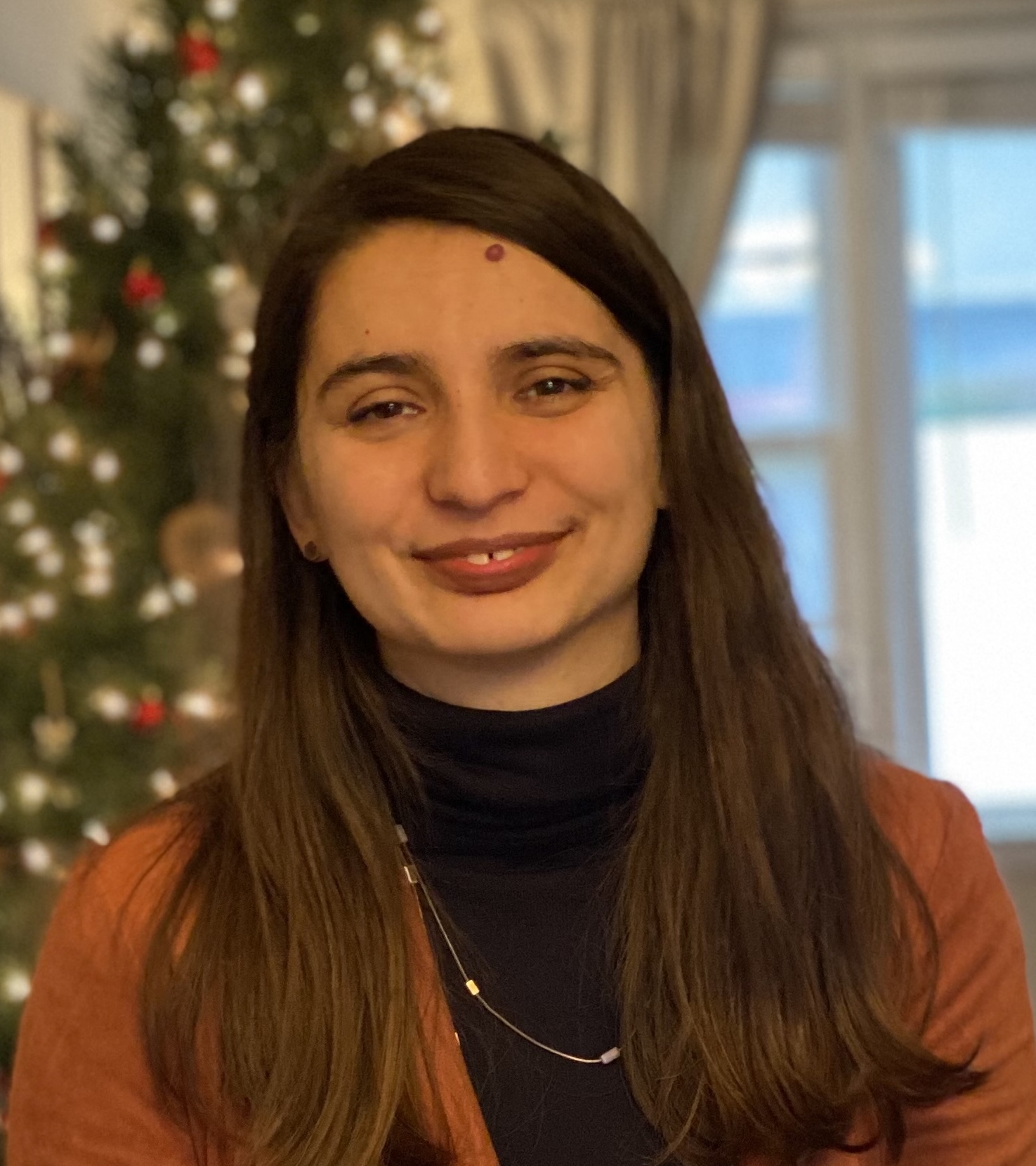
About me
How does language organize meaning when multiple channels can express information simultaneously?
This question drives my research in sign language linguistics, where I investigate how linguistic information is distributed, coordinated, and interpreted across the hands, face, body, space, and time. Sign languages offer a distinctive window into human language because multiple articulators can express different yet interacting linguistic structures simultaneously.
I am a Visiting Scientist at Toyota Technological Institute at Chicago (TTIC). My work examines simultaneity, semantics, pragmatics, prosody, and information structure in American Sign Language (ASL), Turkish Sign Language (TİD), and Nicaraguan Sign Language (NSL). I combine linguistic theory, experimental methods, quantitative movement analysis, and computational modeling to investigate how linguistic distinctions are encoded, how language experience shapes their production and interpretation, and how computational models represent them.
My broader research program, Language Across Channels, seeks to understand what these patterns reveal about the architecture of human language and cognition. By examining how linguistic information is organized across multiple channels, I aim to identify principles of linguistic structure and processing that extend beyond individual languages and modalities.
Explore my research and publications to learn more. You can also view my CV.
Research Background
I previously held postdoctoral research appointments at Toyota Technological Institute at Chicago (TTIC), working with the Speech and Language and Perception and Learning Systems groups, and at the University of Chicago’s Sign Language Linguistics Laboratory. I earned my PhD in Linguistics from Purdue University.
My research brings together theoretical, experimental, and computational perspectives through interdisciplinary collaborations across sign linguistics, psycholinguistics, and artificial intelligence.
Outside research, I enjoy exploring new places, hiking, swimming, and spending time with my rescue dog, Oscar.
 Recent News
 September 2026 | LSA 2027 – Crosslinguistic Research Our work on the computational analysis of head nod trajectories in American Sign Language (ASL) and Turkish Sign Language (TİD) has been accepted for presentation at the 2027 Linguistic Society of America Annual Meeting! Our findings reveal how distinct linguistic functions are encoded through specific kinematic properties of head movements, rather than through holistic movement patterns.
September 2026 | AAAS 2027 – Research Vision My talk, Language Across Channels: The Organization of Language Across Body, Space, and Time, has been accepted for the 2027 AAAS Annual Meeting! I’ll present my broader research agenda on how sign languages organize linguistic information simultaneously across multiple channels and what this reveals about human language.
August 2026 | LSA 2027 – Sign Language AI My research on the linguistic capabilities of SHuBERT, a computational model of sign language, has been accepted for presentation at the Signed Languages and AI: Advances, Challenges, and Ethics symposium at LSA 2027. This work examines where current models succeed and struggle in capturing the multichannel structure of sign languages. I’m looking forward to discussing these findings with the sign linguistics and AI communities!
August 2026 | BUCLD 2026 – Language Acquisition My work, Age of Acquisition Effects on Head Nods in ASL: Computational Approaches, has been accepted as a poster at the 2026 Boston University Conference on Language Development (BUCLD). This study investigates how language acquisition history shapes the production of head movements in ASL.
 July 2026 | New Preprint – Head Movements Across Sign Languages Our new preprint examines how ASL and TİD signers use head nod trajectories to express semantic and prosodic functions. Using kinematic analysis and Dynamic Time Warping (DTW), we found crosslinguistic differences in prosodic head nods but similarities in semantic head nods. These findings provide new insights into how linguistic functions shape the temporal organization of movements across sign languages.
 July 2026 | Best Paper Award – CVPR GenSign Workshop Our paper on the linguistic evaluation of sign language models received the Best Paper Award at the CVPR 2026 GenSign Workshop! This work introduces linguistically grounded evaluation using minimal pairs and examines how computational models capture grammatical distinctions expressed across multiple channels. I’m especially happy to share this recognition with my collaborators!